Solar Builds — Porter, Texas
EG4 12000XP System Build: Whole-Home Solar on a Texas Homestead
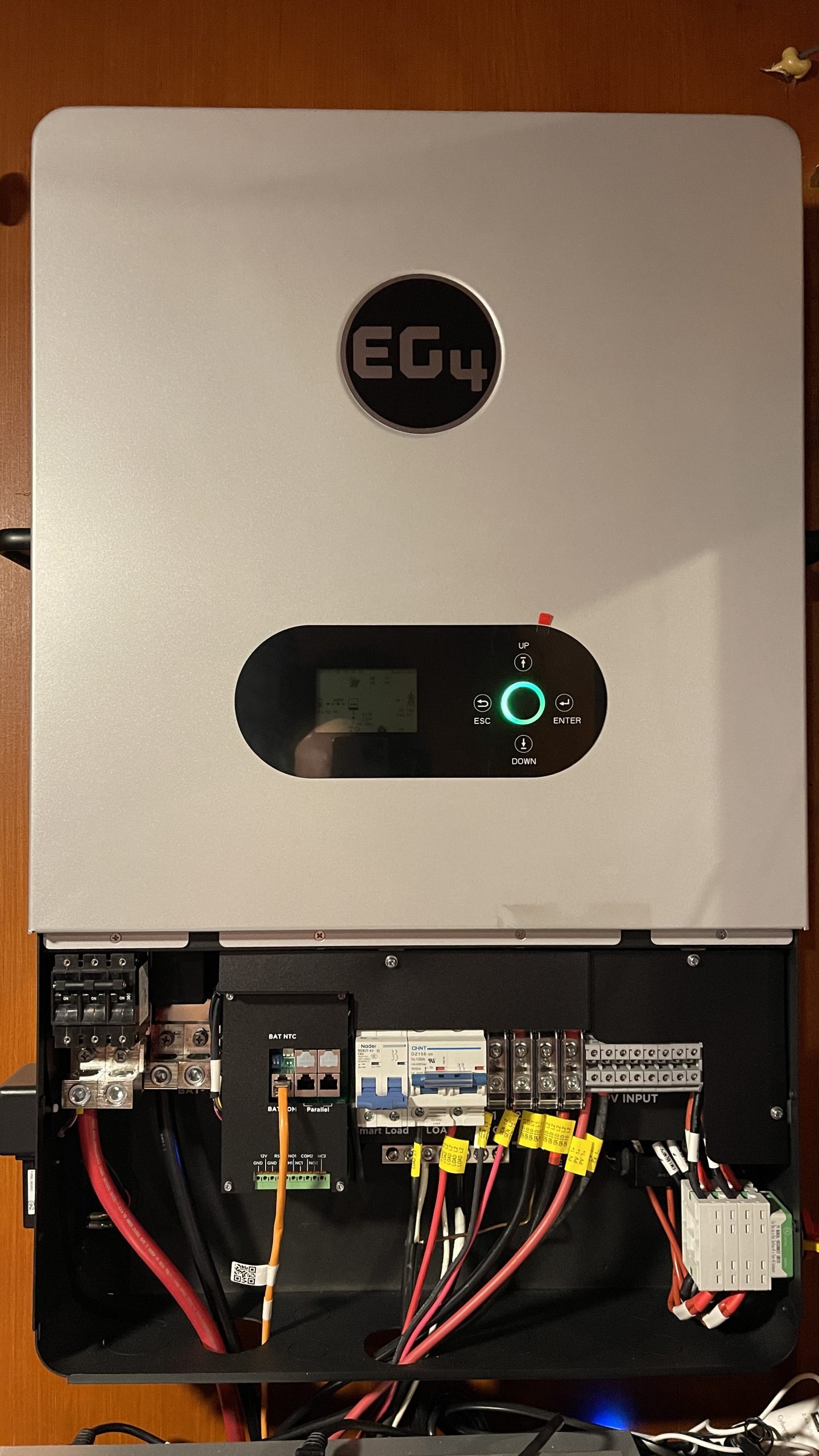
The EG4 6000XP was running well. The homestead was powered. Critical loads were covered. So why did I add a 12000XP?
Because 6,000 watts isn't enough for a Texas summer when the HVAC, well pump, and kitchen appliances are all running simultaneously. When you're pushing a 6,000W inverter hard on a 103-degree afternoon, you feel every watt of headroom you don't have.
The 12000XP is the whole-home system. It handles the full load of the house — not just critical circuits. This post covers the build: why we sized up, how it's wired, what it took to install, and how it integrates with the rest of the homestead's solar infrastructure.
System Specs at a Glance
| Spec | Details |
|---|---|
| Inverter | EG4 12000XP |
| System Voltage | 48V |
| Continuous Output | 12,000W |
| Peak Output | 24,000W surge |
| Solar Array Input | 21kW ground mount array |
| Battery Bank | 50kWh LiFePO4 (parallel bank) |
| Coverage | Whole home — all circuits |
| Location | Porter, Texas homestead |
| Status | Live — running daily ✓ |
Why 12,000 Watts
In Texas, the load calculation that matters isn't your average consumption — it's your peak demand on the worst day of the year. For us that's a mid-July afternoon: HVAC running full blast, well pump cycling, refrigerator compressor starting, shop equipment in use. Add those up and you're pushing 8,000–10,000 watts of simultaneous draw before you add any surge loads.
A 6,000W inverter handles that — technically — but it's working at the edge of its capacity. An inverter running near its continuous rating in high ambient heat is an inverter that runs hot, stresses components, and shortens its own service life. The 12000XP at the same load is running at 70% capacity. That headroom is not wasted — it's insurance.
The real reason to size up: It's not about what you need today. It's about what happens when two things you didn't expect to run at the same time both decide to run at the same time. Inverter capacity is the one spec where buying more than you think you need is almost always the right call.
How the 12000XP Fits Into the Homestead System
This homestead runs two separate EG4 systems. The 12000XP handles the main house — all circuits, full load. The EG4 6000XP runs a separate load group independently. This gives us built-in redundancy: if one system needs maintenance or has an issue, the other keeps its load group running.
Both systems draw from the same 21kW ground mount array and the same 50kWh LiFePO4 battery bank. The array is large enough to keep both systems well-fed during daylight hours under normal Texas conditions.
The Installation: How We Wired It
- Location and mounting — The 12000XP is a larger, heavier unit than the 6000XP. Mount location needs to account for weight, heat dissipation, and access for maintenance. We mounted indoors in a climate-controlled space — critical for longevity in Texas heat.
- Main panel integration — Unlike the 6000XP which feeds a critical loads subpanel, the 12000XP is integrated at the main panel level to handle all circuits in the home. This required careful load calculation and proper transfer switching.
- Battery bank connection — 50kWh LiFePO4 bank connected via properly sized cable for the higher current demands of a 12,000W system. At 48V, you're looking at 250A continuous — cable sizing is non-negotiable here.
- Solar array input — MPPT inputs connected from the 21kW ground mount array. The 12000XP has dual MPPT controllers which allows array configuration flexibility.
- Grid backup input — Grid tied to AC input for backup charging and pass-through. Configured as last resort — solar and battery handle the load the vast majority of the time.
- Generator input — The 12000XP accepts generator input as an AC charging source. We have a generator on standby for extended cloudy periods — it's been used twice in two years.
- Monitoring and commissioning — Connected to EG4 monitoring. Ran a full commissioning check on all circuits before switching over from grid as primary.
Critical Installation Note
The 12000XP is significantly heavier than the 6000XP. Two people minimum for mounting — three is better. Plan the mounting location before the unit arrives, not after. Moving it around once you realize the first spot doesn't work is not fun.
6000XP vs 12000XP: Which One Do You Actually Need?
Since I own and run both, I get this question constantly. Here's the honest breakdown:
| Factor | 12000XP | 6000XP |
|---|---|---|
| Continuous Output | 12,000W | 6,000W |
| Surge Capacity | 24,000W | 12,000W |
| Whole Home Coverage | Yes | Critical loads only |
| HVAC + Well Pump Simultaneously | No problem | Tight |
| Best For | Full home replacement | Backup / partial home |
| Price Difference | Higher upfront | Lower upfront |
The full comparison with real-world data from running both is covered in the 6000XP vs 12000XP guide. If you're on the fence, read that first.
Performance in Texas Conditions
Summer Heat
Two Texas summers on the 12000XP and it has handled everything thrown at it. Peak demand days in July and August — when the HVAC runs almost continuously and the whole house is loaded — the inverter runs warm but within spec. The indoor mounting location keeps ambient temperatures manageable.
Winter Storm Fern
The real test came during Winter Storm Fern when grid power was out for an extended period across the area. The homestead ran entirely on solar and battery throughout. Heat, water, refrigeration, lighting — all maintained. That's exactly what this system was built for.
Generator Backup
In two years of operation, the generator has been needed twice — both times during extended cloudy stretches in winter. The 12000XP handles generator input cleanly and charges the battery bank efficiently. The transition is seamless.
Honest Assessment
The EG4 12000XP is the right inverter for whole-home solar on a Texas homestead. It's not the cheapest option. It is the one I'd buy again without hesitation. Two years of daily operation without a single hardware failure says everything.
Equipment List
- Inverter/Charger: EG4 12000XP — 48V, 12,000W continuous, dual MPPT
- Solar Array: 21kW ground mount — 27 Adani 335W + 32 × 370W panels
- Battery Bank: 50kWh LiFePO4 parallel bank
- Generator Backup: Standby generator, AC input to inverter
- Monitoring: EG4 app — real-time production, consumption, battery state
- Source: All equipment through Signature Solar
Get the EG4 12000XP
This is the inverter running our whole home in Porter, Texas. Available through Signature Solar — use our affiliate link for $50 off and free shipping on qualifying orders.
Shop at Signature Solar → 6000XP vs 12000XP Comparison